Science Communication
Here links to videos, exhibitions, popular science articles, interviews, popular book reviews in which I have been involved
Videos
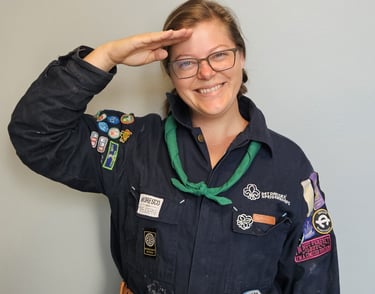
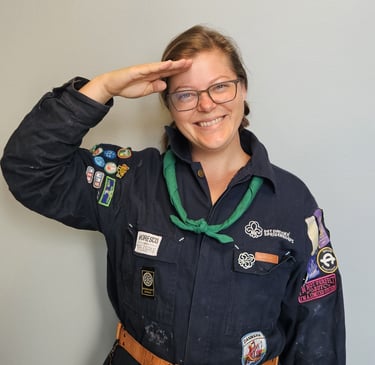
"The Bones in the Scout Hut: An Archaeological Detective Story" play was inspired by real events! I presented on this topic at TAG in Bournemouth and then in Copenhagen in 2025. Here, short video on the story is posted on the Council for British Archaeology's YouTube cannel.


This video on the problems associated with the failure to report failed analyses was part of my graduation "exam" for admission to the Danish Royal Academy of Science and Letters' Science Communication Academy in 2024. I based it on research with colleagues from the COREX project, enthtitled "The BIAD Standards"
"Through the Archaeologist's Eye" is an online exhibition which includes editors' picks from several years' entries to the "Photojournalist of the Year" competition organized by The European Archaeologist (TEA).
Selected popular science articles
Below find a selection of recent work. For a full list, please see my Publications page.
Excerpt: While it is a well-established fact in museum circles that taste and smell are huge triggers of emotion and memory and can greatly enhance visitor experiences, it remains uncommon to see historians reach out and transform modern food trends by means of inspiration from the past. Nevertheless, this is exactly what has happened in eastern France! Just over a decade ago, one of our colleagues visited the town of Langres in the region of the Upper Marne. Though Langres is known as the home of Denis Diderot, author of France’s first encyclopedia, the historian was visiting the region for another reason entirely; as a specialist in medieval food, he was on a quest to educate his palate! His stop in Langres was centered around his search for a local medieval specialty known as the ‘ouyette de Langres’, a pastry stuffed with a ragout of goose meat simmered with shallots, parsley, nutmeg, four spice and white wine and baked until golden. Here, we trace the fascinating story behind this unusual delicacy and provide an up-to-date recipe for the modern kitchen!
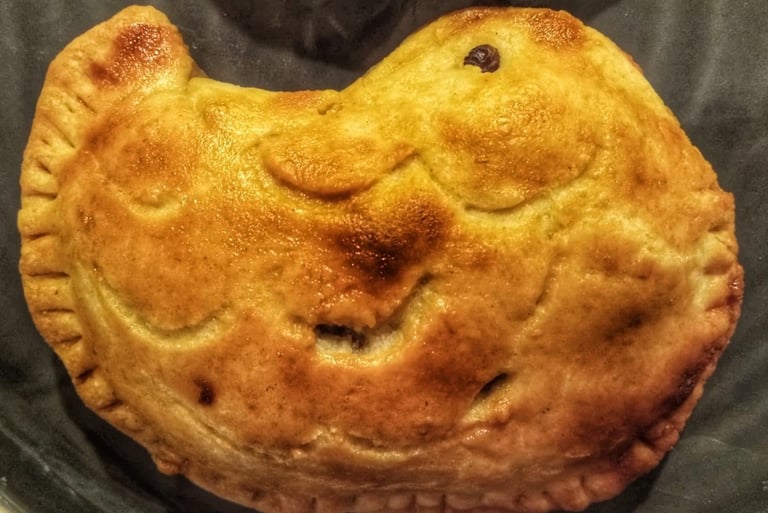
Jean-Luc Renaud & Samantha S. Reiter 2026. "From France: Historian inspires medieval food revival" The European Archaeologist 86
Samantha S. Reiter 2026. "How much is your body worth?" ArchaeoSnack
Exceprt: The importance of bodies—and control thereover—has been recognized much longer and holds more sway than you would think. Habeus corpus (lit. “you shall have the body”) is a foundational concept of many legal systems, and is intended to guard against the physical detainment of a (living) body without just cause. But even dead bodies have power. In fact, there is even a term for battles fought over corpses—Leichenkämpfe. Homer’s description of the Leichenkampf over the corpse of Achilles’ companion Patroclus during the siege of Troy suggests that the impulse to control bodies predates even the arrival of the written word…and still makes headlines today. Would you do battle over a dead body?
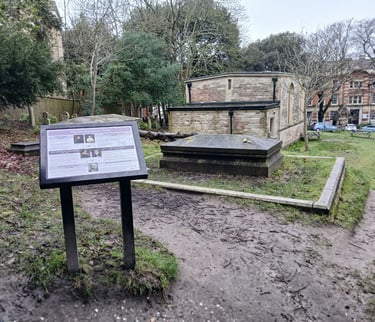

Samantha S. Reiter 2026. "Where would you send your heart to find peace?" ArchaeoSnack


Excerpt: The heart has particular significance in the West as a symbolic midway point between spirit and mind. It is thought to represent the essence of self when all other parts are stripped away. In the Middle Ages, Europeans began a curious funerary practice in which they divided the corpse into separate pieces (often of body, entrails and heart, or even just body and heart). Because of its symbolism, particular importance was placed upon the placement of the heart, and the practice of heart burial was born. The persons and places to which people have historically sent their hearts have expressed piety, loyalty, love and devotion. Here we seek out historical examples of places and peoples with whom hearts rested in peace, while their bodies were in pieces.
Excerpt: In 2002, Mary Woodsen of Cornell University, New York made some shocking estimates about the sustainability of current burial practices. Every year, traditional burials put more then an Olympic swimming pool’s worth of embalming fluid, enough hardwood to build more than 1123 homes, the equivalent of 13000 elephants in steel, 233,714 elephants’ worth of reinforced concrete and 4,000 elephants’ worth of copper and bronze into US soils alone. From these figures, it is easy to imagine that cremation may be the more responsible option. Unfortunately, as further research later discovered, each cremation releases between 0.8 and 5.9 grams of toxic mercury, of which 75% goes into the air and the remainder settles into the ground and water. Interestingly, you could drive about 7,772 km on the energy equivalent needed to cremate someone.
Students of human history know that there is often a relationship between the effort and/or money placed in the grave and the status achieved or ascribed by the deceased. That funerals were expensive in terms of the environment is also not new; burial mound builders throughout prehistoric Europe used the most fertile agricultural topsoil to entomb their most powerful leaders, removing that crucial resource from societies that depended upon farming for their daily lives. That being said, the environmental cost of traditional funerals has now reached a proportion that is far beyond our ability to sustain it. As Native American Chief Seattle is quoted as saying, “we did not inherit the earth from our ancestors; we borrow it from our children”. A sustainable burial may be the last gift we can give. For this reason, we may wish to choose a burial which is truly traditional, and return to the pared-down, un-embalmed funerals allotted to Homo naledi which are today called ‘green’, ‘natural’ or ‘eco’ burials and pay that gift forward.


Samantha S. Reiter 2025. "After death: History’s lessons on the removal, management and sustainability of human remains" ArchaeoSnack
Other popular science communication
Excerpt: As you pack your rucksack for summer fieldwork, I highly recommend you save a spot for Jodi Taylor’s Just One Damned Thing after Another (2013, Accent Press, Ltd.). After a hard day working in the sun, it is the perfect way to wind down – especially if your trenchmates have been winding you up! The book is exactly what it says on the jacket: a new slant on history peopled by a madcap crew of strong (and often accident-prone) historians who carom around the past. They do not “do” time travel; instead preferring to describe their activities as the “investigation of major historical events in contemporary time”. Think about that for a second or two. You can imagine why working at St. Mary’s Institute for Historical Research would actually be every archaeologist’s dream job...


Image © Headline Publishing
Samantha S. Reiter 2024. REVIEW Taylor, Jodi. 2013. Just One Damned Thing after Another. “The Chronicles of St. Mary’s” Accent Press Ltd. Abercynon. The European Archaeologist 81
Samantha S. Reiter & Geesche Wilts 2024. "On archaeology, travel, dreams and politics: TEA's S. Reiter interviews Geesche Wilts, the powerhouse behind the archaeology and travel blog Miss Jones.


Dr. Samantha S. Reiter
Senior Researcher in Osteoarchaeology
The National Museum of Denmark
Inquiries
contact@archaeoreiter.com
© 2026 Dr. Samantha S. Reiter - Senior Researcher in Osteoarchaeology